Microaggressions Training
Microaggressions can appear small or insignificant in isolation, but repeated comments, assumptions and behaviours can affect people's confidence, wellbeing and sense of belonging. This practical course helps delegates recognise subtle exclusion, understand intention and impact, challenge assumptions and communicate in ways that support everyday inclusion.
Not every experience of exclusion is obvious. Sometimes it is a comment, question, assumption, joke or everyday interaction that leaves somebody feeling that they do not quite belong.
The person responsible may have intended no offence at all. They may even have believed that they were being friendly, complimentary or showing an interest.
That is one of the reasons microaggressions can be difficult to discuss. If somebody raises a concern, they may be told that they are being too sensitive or that the other person “didn't mean anything by it”. If they say nothing, repeated experiences can accumulate.
Our Microaggressions Training creates space to explore these nuances without simply dividing people into those who “cause” microaggressions and those who experience them. Delegates examine assumptions, communication, context and impact, and consider what everyone can do differently.
We use realistic workplace scenarios to explore comments and behaviours that may appear harmless on the surface but can communicate unintended assumptions or messages.
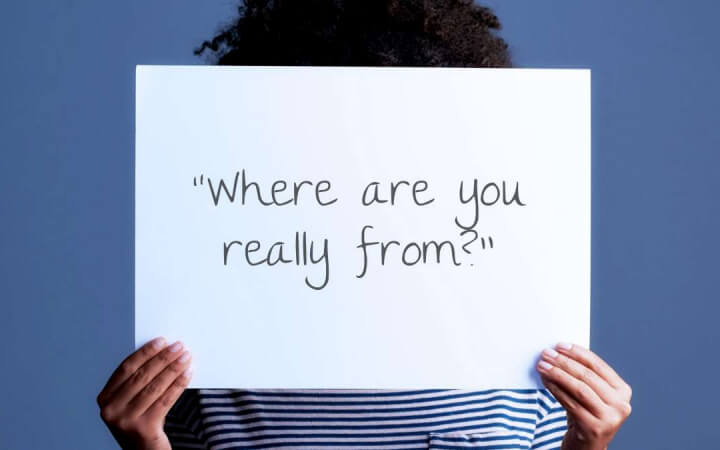
A British Asian employee is repeatedly asked where they are “really” from after explaining that they were born and brought up in Britain.
We explore:
A Black professional notices that colleagues repeatedly express surprise at how articulate and professional they are.
We explore:
A woman is regularly asked to take minutes and organise refreshments during meetings, although male colleagues of equivalent seniority are present.
We explore:
The term microaggression is commonly used to describe subtle comments, behaviours or interactions that can communicate stereotypes, assumptions, exclusion or bias towards another person or group.
The word “micro” can be misleading. It refers to the nature of the interaction rather than suggesting that its impact must be small.
A single comment may appear insignificant to the person making it. For somebody who repeatedly encounters similar assumptions about their identity, competence, background or belonging, the cumulative experience can be very different.
Microaggressions can be connected with race, sex, disability, age, sexual orientation, religion or belief, gender reassignment and other aspects of identity or difference. They can also arise from wider assumptions about people's backgrounds, roles or experiences.
Not every awkward, insensitive or poorly judged comment is necessarily unlawful discrimination. Depending on the circumstances, however, workplace behaviour may raise issues under equality law or an organisation's own dignity, inclusion, bullying or harassment policies.
Intention matters when we are trying to understand why somebody behaved as they did. But intention and impact are not the same thing.
A person can have positive intentions and still communicate an assumption that somebody else experiences as excluding, stereotyping or undermining.
Equally, labelling somebody as prejudiced simply because they have used the wrong words may close down the very conversation that could help them understand and change.
Our approach encourages delegates to move beyond the simple question of “Did they mean to offend?” and also consider “What message might have been communicated, what was the impact and what could be done differently?”
One of the most important concepts in microaggressions training is repetition.
A person responding to a particular comment may not be reacting only to that single interaction. They may have experienced the same assumption, question or stereotype many times before.
This helps explain why two people can experience apparently similar interactions very differently.
The course encourages delegates to listen to lived experiences rather than immediately judging whether somebody “should” have been affected by a particular comment or behaviour.
Understanding cumulative impact does not mean that people need to become frightened of saying the wrong thing. It means developing greater curiosity about how our everyday interactions may be experienced by people whose lives and experiences differ from our own.
Rather than treating microaggressions as a list of forbidden phrases, we explore the assumptions and patterns that can sit underneath them.
Questions or comments that can imply somebody is an outsider, does not belong or is less authentically part of the organisation or wider community.
Assumptions about somebody's intelligence, capability, seniority or expertise based on identity, appearance, accent or background.
Assumptions about the roles people should perform, how they should behave or what responsibilities naturally “fit” them.
Experiences of being overlooked, interrupted, confused with somebody else, excluded from conversations or having contributions attributed to others.
People often worry about what to say when somebody tells them that a comment or behaviour has had an unintended impact.
A defensive response — “That's not what I meant”, “You're being too sensitive” or “I say that to everyone” — may focus entirely on intention and leave little room to understand the other person's experience.
The course explores more constructive responses, including:
People who experience or witness a microaggression may want to challenge it, but there is no single response that will be right in every situation.
The course explores ways of questioning assumptions, describing impact, seeking clarification and challenging behaviour constructively.
We also consider power and safety. Somebody may feel very differently about challenging a close colleague than challenging a senior manager, customer or influential stakeholder.
Where developing wider skills for responding when employees witness inappropriate behaviour is a priority, our Bystander Intervention Training provides a more detailed exploration of intervention strategies.
By the end of the course, delegates should be better able to:
Microaggressions Training can be delivered to employees at all levels and is particularly useful for organisations seeking to develop more inclusive everyday behaviours and communication.
The course can be tailored for:
If you are looking for training for yourself, or only need one or two places, you do not need to commission a private in-house session.
We also run a scheduled Microaggressions Open Training Course online via Zoom, where individual delegates from different organisations can book places.
View Microaggressions Open Course dates and booking information
If microaggressions are part of a wider workplace issue, one of these courses may be more appropriate.
Choose this course when humour, teasing, comments and understanding when workplace banter crosses a boundary are the main concerns.
View course
Choose this course when employees need practical skills and confidence to respond when they witness inappropriate workplace behaviour.
View course
Choose this course when employees or managers need broader skills for addressing inappropriate, unacceptable or difficult workplace behaviour.
View course
All our courses are tailored to ensure the training reflects your organisation's goals and priorities.
The course can be delivered face-to-face or online via Zoom or Teams.
To support participation, discussion and interaction, we recommend the following group sizes per session:
Need to train a larger workforce? No problem. We regularly work with organisations that need to train larger numbers of employees. Where appropriate, training can be delivered across multiple sessions to ensure everyone receives the same high-quality, interactive learning experience. We can develop a delivery programme to suit your workforce size, locations and timescales.
Please note: the half-day rate is not always available for face-to-face sessions.
Over 25 years' experience delivering equality, diversity and inclusion training, consultancy and professional development.
Keep updated with the latest equality and diversity news, offers and updates.